
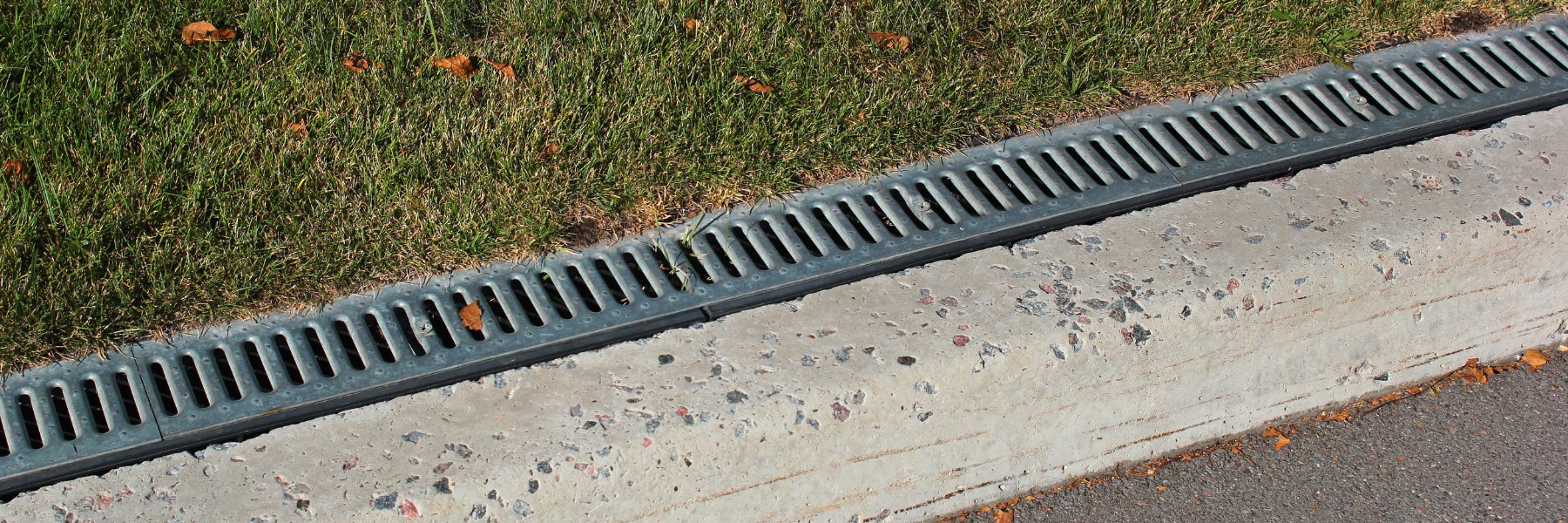
Signs Your Yard Needs a French Drain in Oklahoma
Why Drainage Is a Common Problem in Central Oklahoma
Much of the Oklahoma City area sits on dense clay soil that absorbs water slowly. When heavy spring storms roll through, the ground can only take in so much, and the rest runs across the surface or pools in low spots. Over time, this repeated saturation can affect lawns, landscaping, and the areas around your foundation.
Lot grading plays a role as well. Homes are sometimes built on lots where the grade directs water toward the house or into a backyard low point. Settling soil, new construction nearby, and changes to the landscape can also alter how water moves across a property.
The good news is that drainage problems are usually solvable. Understanding where the water comes from and where it should go is the first step, and a French drain is one of the most effective tools for the job.
Warning Signs to Watch For
The most obvious sign is standing water that lingers for a day or more after rain. If you see puddles in the same spots repeatedly, the soil is not draining the way it should. Soggy, spongy turf, moss growth, and patches where grass keeps dying are other common indicators.
Pay attention to your foundation and hardscape too. Water pooling along the foundation, damp areas near window wells, or mulch that keeps washing out of beds can point to runoff issues. Patios, walkways, and retaining walls that shift or settle may also be reacting to excess moisture in the soil.
Even a yard that looks fine in dry weather can have underlying problems. If you are not sure, walk your property during or just after a good rain and notice where the water travels. Taking a few photos can help when you talk with a contractor.
How a French Drain Works
A French drain is a trench filled with gravel and typically contains a perforated pipe. Water enters the trench, flows through the pipe, and is carried to a better discharge point, such as a lower area of the yard, a street outlet, or a dry well. The gravel allows water to move in easily, while the pipe moves it away.
Proper slope is essential. The trench must be graded so gravity carries water in the right direction, and the pipe should be wrapped or surrounded with filter material to help keep soil from clogging it. Details like depth, width, and placement depend on your yard and the source of the water.
A French Drain Installation can be tailored to many situations: along a foundation, at the base of a slope, across a low backyard, or behind a retaining wall. In some cases, we pair it with other features such as catch basins, downspout extensions, or river rock channels for a complete drainage plan.
Planning Your Drainage Project
Every yard is different, so the best approach starts with an evaluation. We look at the grade, the soil, downspout locations, and the path water takes during storms. From there, we can recommend a solution that fits the problem rather than a one-size-fits-all fix.
Drainage work is often done in coordination with other landscape improvements. If you are planning a new patio, bed, or lawn renovation, it makes sense to address water flow first so the new work is not undermined. After installation, the surface can be restored with sod, rock, or plantings so the trench blends into the yard.
Finer Edge Landscape Group is locally owned and insured, and we offer free estimates on every project. We serve homeowners and businesses throughout the Oklahoma City metro, including Edmond, Norman, Moore, Yukon, Mustang, Newcastle, and Noble. Contact us to schedule a drainage evaluation.